Sunday, August 30, 2020

Interview with Smriti Mundhra on Indian Matchmaking

 The following post was published in American Kahani


“Indian Matchmaking” Wasn’t Made for a Western Audience: A Conversation with Smriti Mundhra

  • The creator and executive producer of the Netflix series discusses the show’s global popularity and if it propagates stereotypes and biases such as colorism, casteism among Indians.
Most of us have at least heard of “Indian Matchmaking” on Netflix by now. If not, check out my “Cringe and binge” review of the series last month. I am ceaselessly fascinated by ‘process’ when it comes to the creative arts and wanted to share a chat I had with the creator and executive producer of Indian Matchmaking, Smriti Mundhra. 

Smriti is a second-generation filmmaker. Her father was the illustrious filmmaker Jagmohan Mundhra, who is best known for helming biopics “Provoked” (2006 Aishwarya Rai), “Bawandar” (aka Sandstorm, 2000, Nandita Das), and “Kamla” (1984 Shabana Azmi). Smriti began her own journey as a filmmaker in her teen years. When most of us were trying to get fake IDs to buy alcohol or cigarettes, she was forging internships on film sets (reminiscent of Mae ‘Maeby’ Fünke a la “Arrested Development” no doubt!). She produced her first award winning feature film “Bomb the System” at the age of 22 and hasn’t looked back since. Earlier this year, still shy of 40, she received her first Oscar nomination for her documentary short “St. Louis Superman,” a film that becomes even more relevant as the BLM movement continues to grow. 

I wanted to chat with Smriti about her response to how “Indian Matchmaking” has been received, and to hear from her what her motivations were around this series that has sparked so many conversations in households across the world. Excerpts from the interview:

AB: “Indian Matchmaking” is the #1 series on Netflix in India, and in the top 10 in the U.S. How does it feel? 

SM: It’s been amazing and overwhelming. Maybe I was naive, but I was absolutely not prepared for this much interest and conversation, and the mania around the show. I’m glad it’s got people talking.
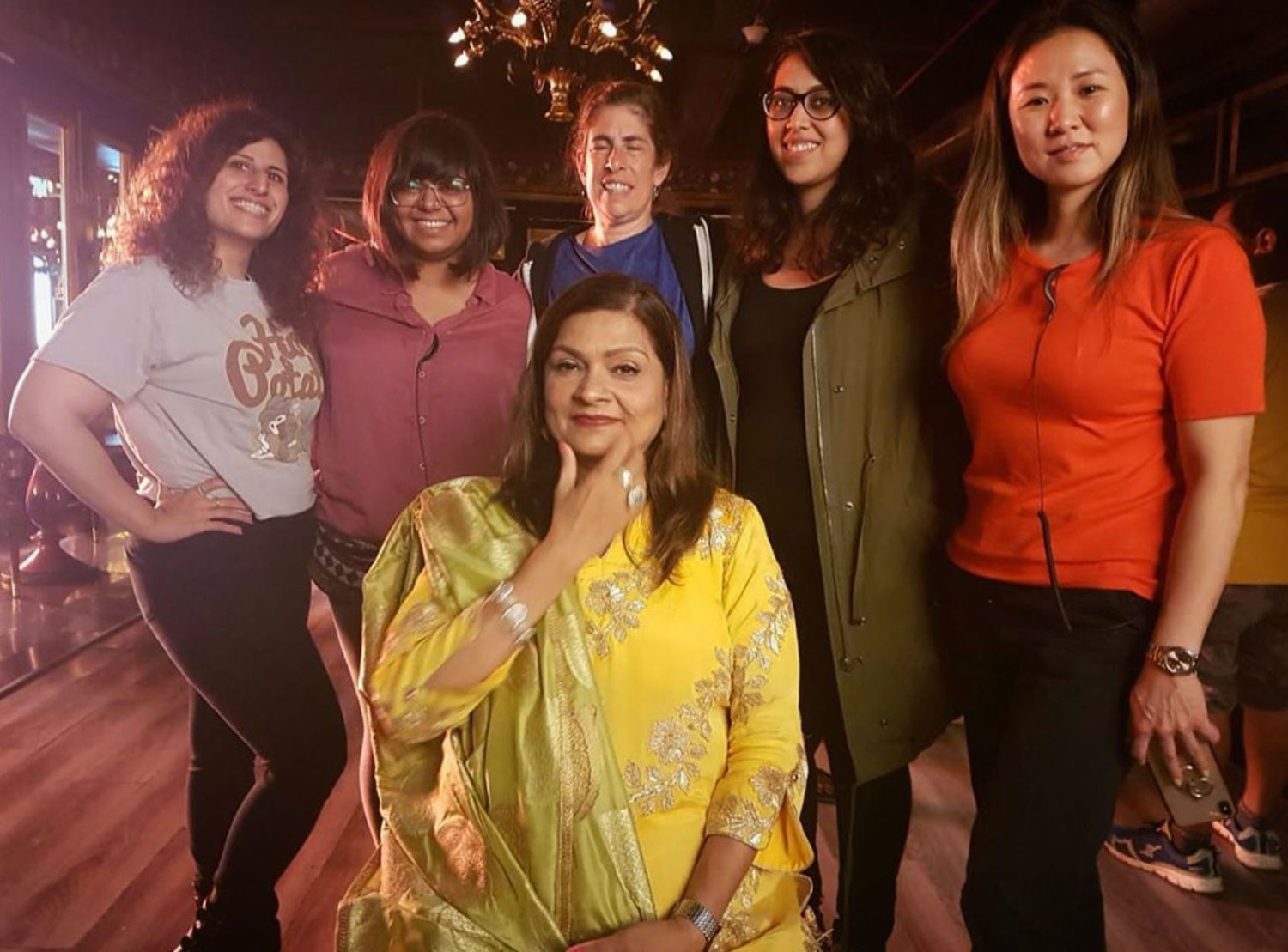
creator and executive producer of Indian Matchmaking, Smriti Mundhra. Top photo, Mundhra, second from right, with the “Indian Matchmaking” team.
PIN IT

AB: It definitely has a lot of people talking. Some people love it, and some people absolutely hate it. 

SM: I’m happy for all of the conversation. I was prepared for the critiques and the backlash as well. I think this is a super triggering topic that people have very strong opinions about. When you have something that comes out of India and reports to represent South Asian culture, and then it gets so big — there are going to be people who feel left out of it; that it didn’t cover their experience of this very broad topic of marriage and arranged marriage. That’s fair — I understand where that is coming from. I think the conversation and critique is really good. We made this show to start conversations. We wanted people to re-examine the things that we have ingrained in our society and our attitudes towards marriage for a really long time, and we don’t really talk about and quietly accept and tolerate. This show was made for an Indian and Indian diasporic audience. It wasn’t made for a Western audience. That also is a part of the conversation and makes it a little tricky. Because you have culturally specific content, that is available globally. How do you balance — who is your audience? Who is this for? So, when something like this blows up outside of the diaspora, in hindsight it poses all these questions — why didn’t you include this? Explain this? Why didn’t you talk about this? But we were making the show for people who wouldn’t necessarily need that context or explanation. We didn’t want to start from the place of making it for a Western gaze.

AB: One of the criticisms I have seen a lot is that the show propagates stereotypes, and biases such as colorism, casteism, etc. 

SM:  It’s not the job of the show to judge or critique. It’s not that type of docuseries. It’s a dating show. Our goal was to present the reality of this world as accurately as possible. And let the viewers be the critics. [Matchmaking] is a problematic system that does not work for everybody. There are people who deliberately move against it, and others who opt into it. We show that full range of experience and their interactions with the idea of traditional marriage. Sima comes from a very traditional stance. Her arc on the show is recognizing that she must also grow and evolve if she’s going to be able to successfully run a business. She has to be responsive to the demands and needs of her clients, that are changing. The clients are also demonstrating their dynamic between wanting to hold on to their traditional culture & identity, but also rubbing up against what feels problematic and saying their truths. The one thing we did try to do was make sure there was enough diversity in perspectives and ideology in the show, so that it wasn’t just a bunch of people desperate to get married, who will accept anything, or any critique. If there was any inherent commentary it was that – let’s show the tradition, as it authentically is, and show the new generation that is pushing back against that, as they authentically are, and let the people decide for themselves. We didnt try to consciously expose the flaws, but we also didnt try to hide any of them.

AB: As a filmmaker myself, I feel frustrated when I hear people refer to this series as a “reality show.” There is a distinguishable difference between reality TV and a docuseries, and I would love it if you could shed some light on that, and how it relates to this particular series. 

SM: For the most part, we’ve seen dating shows through the lens of “Reality TV.” “Bachelor,” “Too Hot to Handle,” etc. Those shows are much more heavily produced. They have an inherent framework or gimmick — whether it’s a bunch of people living in the same home competing for the same man, or whatever. [The producers] are casting people who are very well-versed in reality TV — models, actors, influencers type of people – people who already have or are creating a public platform. In a docuseries — yes there [is] an organizing principle. It’s a dating show about Indian millennials trying to get married — reconciling their progressive, modern, western beliefs or lives with their traditional cultural identities. In doing that, we wanted to cast real people who are going through this process. Not people who fit a certain physical type, or who are there for some kind of tokenized representation. And certainly, we were not casting for characters — like we need a hero, a villain, a victim, a shit-starter, etc. The only objective in casting was — let’s find the people who are the most open, authentic, and willing to be vulnerable. And within this somewhat narrow world of matchmaking, let’s try to push for as much diversity as we reasonably can. We don’t have a team of producers on the ground trying to manipulate people into creating drama. We tried to stay close to reality as much as possible. There was nothing emotionally manipulative about the show. It wasn’t like ‘This was actually a really good date, but we need to make it look like a really bad date for the show.’ We feel that there is inherently enough emotion and drama in the course of normal people dating that we trusted that would be enough to make a great show. Of course, it’s a TV show — it’s edited; it’s a narrow slice of somebody’s life. It’s never going to be a full, authentic representation of their full life and character. 

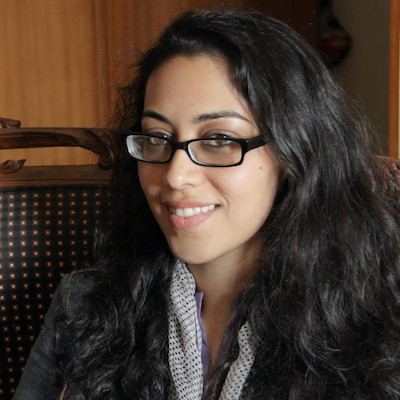
The author, Antara Bhardwaj, right, with Smriti Mundhra in Dubai, 2006 for the premiere of “Provoked.”
PIN IT

AB: Speaking of characters — I think it’s very commendable that despite all the responses, positive & negative, none of the cast members have spoken ill of the producers or the TV show. 

SM: I love our cast. The participants are amazing. Most of them hadn’t met each other or even knew who was on the show. But [now] they’ve formed almost a support group for each other. They’ve all handled it with so much grace and dignity. And this is another thing that is so different from being on a traditional reality TV — [those people] are expecting a certain degree of fame, and you invite that. When you’re on a show like this, they went overnight from being regular people to viral celebrities. No one expected the show to blow up as much as it has. Considering all of that pressure, it’s a lot to deal with — where the whole world feels like they have an opinion on your life. Especially for those who have been getting a lot of vitriolic comments — I am so proud of the participants of this show and can’t speak highly enough of them. 

AB: Do you have any favorites? 

SM: (laughs) I can’t choose favorites amongst my children! I love everyone in the cast. They are all incredibly real, honest, authentic people, who went along for the ride and were up for the adventure. They opened up and brought their authentic selves to the experience, and I love them all for that. I have a soft spot for Aparna because I can really relate to her. To me, she really symbolizes the reaction to what society expects of women. The way she reacts to some of those really unfair expectations – that women should be pleasant and conforming and conciliatory. Aparna is the manifestation of saying a big “F-you” to that. [Her viewpoint is] I’m a person that is ambitious, and successful and I got here because I’ve held myself to a very high standard, and I’m going to hold other people to that high standard – whether it’s a matchmaker, or someone I go on a date with.  I see someone that is unapologetically herself, but also self-aware, where she can think differently or grow into something new.

AB: The series left on a note that leaves the viewer speculative of Season 2. Is that a correct assumption? 

SM: We don’t know yet — it’s up to Netflix, and we’re still a little ways out before that [is decided]. 

AB: Is there anything specific you would want to do or show next time around? 

SM: The goal for me always, in everything that I do, is to keep widening the aperture of what we see in the world around us. As much as we pushed for diverse perspectives in this first season of IM, it’s still a very narrow slice of the South Asian experience. The goal is always to push for more… but it has to be done in an authentic way. Now that we’ve proven the model — that a dating show from a culturally specific view can work, that people are interested in it — I think we’ll have a lot more opportunity to expand what that world looks like in upcoming seasons – geographically, ideologically, culturally. 

For those who haven’t already seen it, do watch Smriti Mundhra’s directorial debut documentary “A Suitable Girl,” available on Amazon Prime. The film follows three young Indian women for four years as they go through the arranged marriage process. And you will see the story of “Sima from Mumbai,” trying to find a match for her own daughter as well! 


Antara Bhardwaj is a Kathak artist and filmmaker based in Mountain View, California, where she lives with her husband and son. She runs a dance company and school by the name of Antara Asthaayi Dance. You can follow her on Facebook and Instagram.

Wednesday, July 29, 2020

"Indian Matchmaking" review

The following post was published in American Kahani.  


Cringe and Binge: ‘Indian Matchmaking’ Forces You to Confront Indian Societal Norms

  • Entertainment value aside, the docuseries by Netflix takes its audiences through a full array of emotions.

Never has a show sparked so much conversation in my home. While I burst out laughing watching the unexpected silent response of a young man who was asked what he wants in a bride, my husband was writhing uncomfortably in his seat. We are Gen-X’ers — I grew up in the U.S, my husband was raised in India and moved out here in his 20’s. 

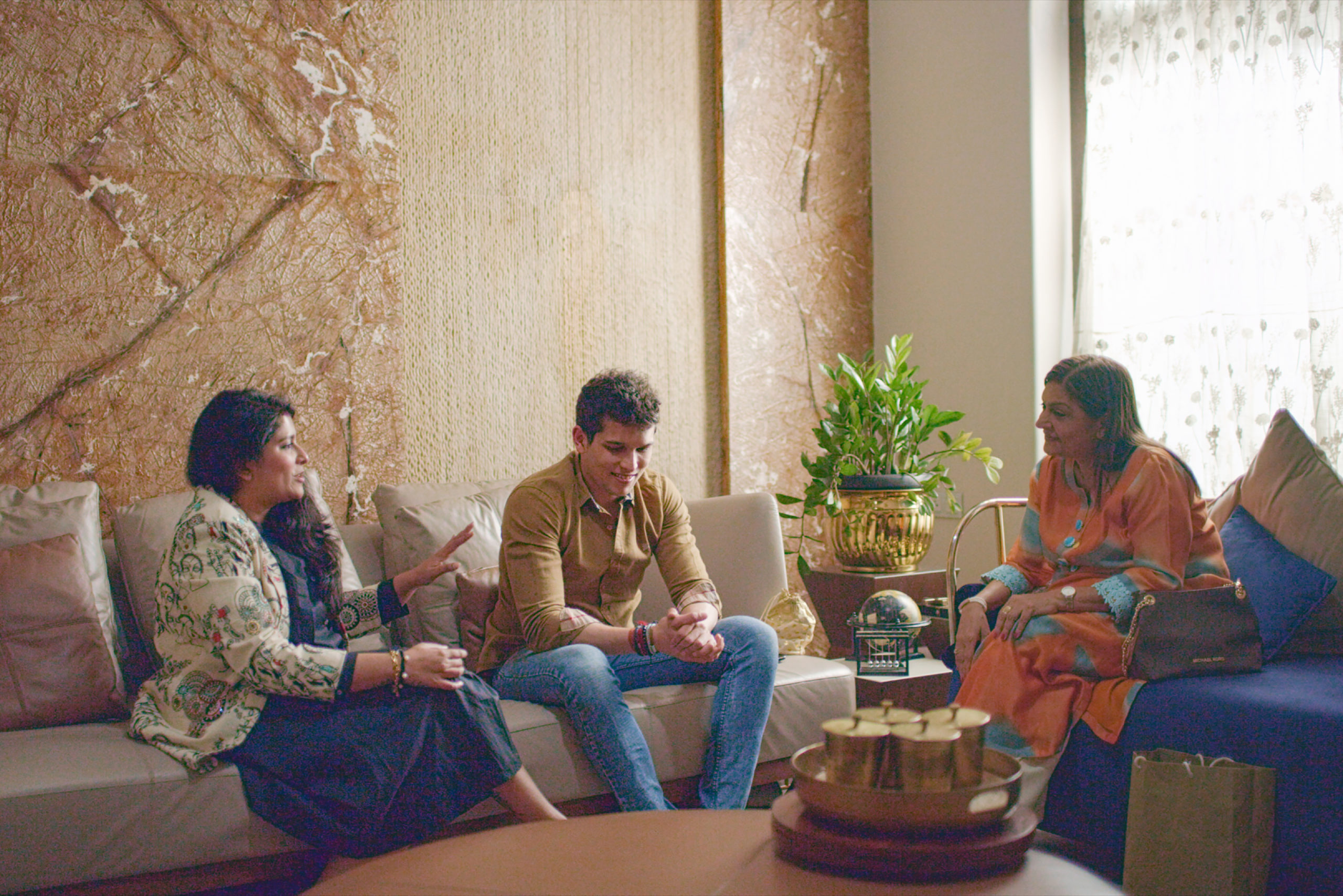
Antara Bhardwaj  Netflix’s “Indian Matchmaking” gives you an in-depth look into the process of finding a life partner through a specific avenue of arranged marriage. Sima Taparia (also previously seen in “A Suitable Girl”) is an elite matchmaker who works with the upper echelons of Indian society. In this series, she ventures out to the United States, and brings her skill set of matchmaking to Indian Americans — GenX & Y’ers. 

The docuseries (not to be confused with traditional ‘reality tv’) follows half a dozen or so individuals from various walks of life — an independent female lawyer in Texas, a wealthy jeweler’s son in Mumbai, a school teacher in the Midwest, an female entrepreneur in Delhi, a divorcee with a child, among others. 

The show brings to the forefront some of the inane “requirements” that families look for in a potential bride or groom. It is hard not to notice how many times “fair” is casually thrown around, or the preoccupation with height and “slim figure.” It is also curiously striking when you see a young Indian American going on a first date with a girl … and her mother. 

The filmmakers navigate through all these various themes with a nuanced sensitivity and a non-judgmental approach. Sima Taparia is the star of the show — carrying through the narrative of each storyline, while sharing with the viewers her thoughts about the process, and frustrations with her clients. Her ultimate comeback — “I cannot do anything if the stars are not aligned.” And she’s not kidding when she says this, as we learn from the astrologists she brings in as a part of her consultancy process. 

Don’t expect happily tied up endings in this docuseries. This is not reality TV, and the producers have not forced a “Bachelor” like ending to each character’s story.

Entertainment value aside, “Indian Matchmaking” takes its audiences through a full array of emotions … not only showing a character arc for those going through the matchmaking process, but an overall arc of the show. It brings you in with easy-to-pick on Aparna, an overly critical, entitled woman who refuses to watch football with her future partner ever (unless it’s box seats), and exposes you to the complexities of traditional Indian households and hierarchies of power within the home — and not necessarily the way you would imagine them to be. 

Don’t expect happily tied up endings in this docuseries. This is not reality TV, and the producers have not forced a “Bachelor” like ending to each character’s story.

“Cringe and binge,” I heard someone say to describe this show. Whether you love it, or you hate it (as was the case in my own household), this show will evoke a response and force you to face your own feelings about societal ‘norms’ of our Indian community and culture. 

Disclaimer: The author is a friend of the show’s creator/executive producer and was briefly involved in the casting process. 


Antara Bhardwaj is a Kathak artist and filmmaker based in Mountain View, California, where she lives with her husband and son. She runs a dance company and school by the name of Antara Asthaayi Dance. You can follow her on Facebook and Instagram.
Wednesday, June 3, 2020

Summer-in-Place

The following post was published in American Kahani


My Wonder Years And the Coming Summer-in-Place

Life moved at a very different pace when I was growing up in Silicon Valley in the 1980s. Days languished on — life was not hurried. I walked to and from my local public elementary school, and after school there were no activities to rush to. I don’t even remember getting into our car on a weekday. Perhaps the only rush was to finish our paltry homework, so that we could run out to find other kids on our street riding their bikes or roller skating, drawing hopscotch, etc. 

My best friend lived four houses down from our’s, and our new next door neighbor had two girls around my age and my and my sister’s, so we all became fast friends. I didn’t have their phone numbers — in the off chance that they weren’t already out on the street playing, I would knock on their door and ask the age old question, “Can (name of friend) come out and play?” Rarely was I met with a no. 

My father was in the nascent stages of his own start-up — something that wasn’t very common in that era. I remember trying to explain to my friends that my dad worked for himself, and was met with confused frowns. “So … he doesn’t work?” My father came upon some money when the previous company where he was working was acquired. Rather than joining the new company, he decided to cash out and start something of his own. The $96k he made would be enough to keep our family of four (and mortgage) afloat for a couple of years. 

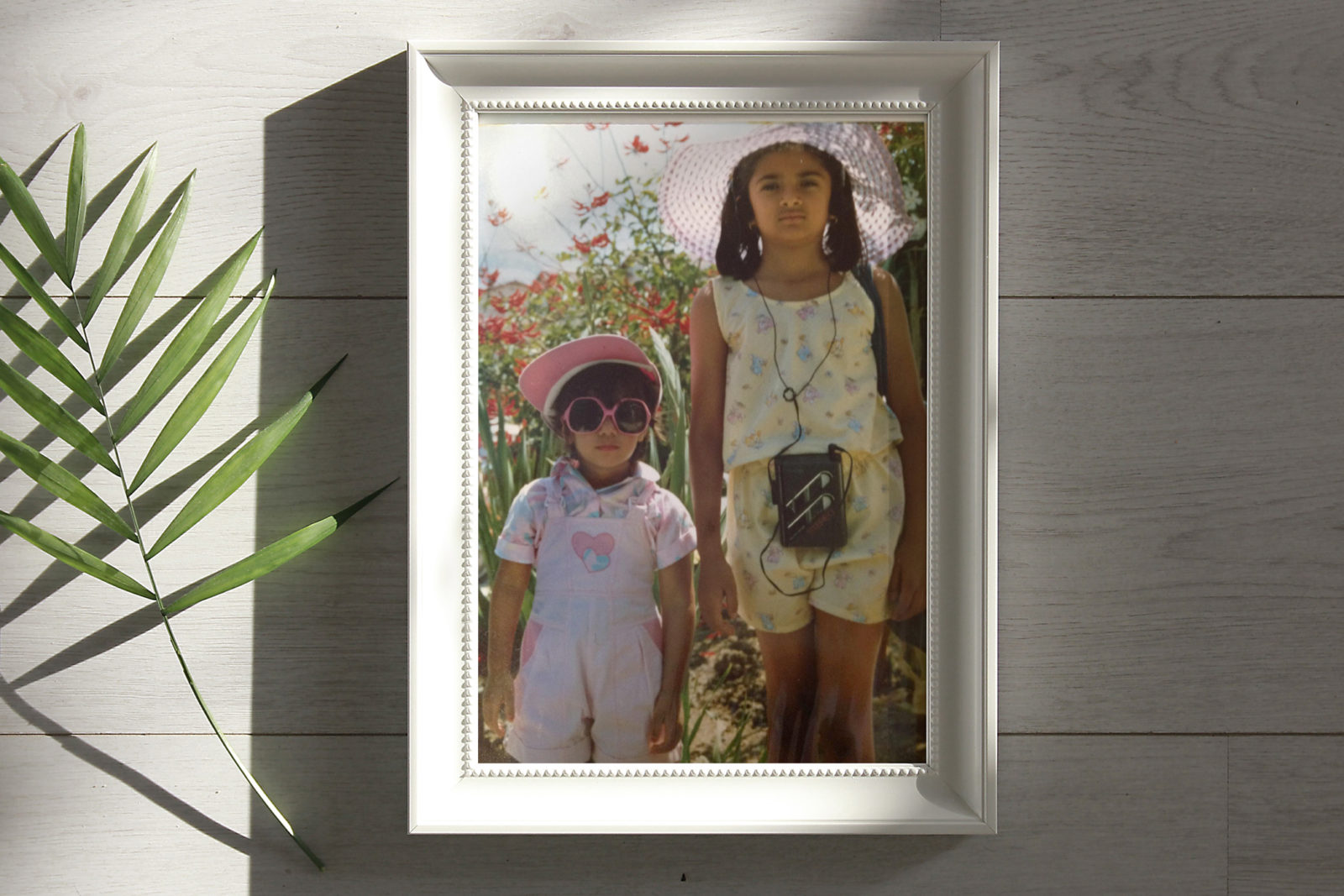
The author seen here in the summer of 1988 with her younger sister.
PIN IT

I still remember the office my parents built for him in the garage. A few months later, the office lay abandoned, as the oppressive summer heat came in, and the lack of ventilation became unbearable. His office was moved to my little sister’s bedroom, which was more of a storage room for her stuff anyway, since she slept in my parents bed (“co-sleeping” was a term we never heard of in the 1980’s). 

Money was tight — there was no frivolous spending, or wastage of any sort. My mother made home-cooked (predominantly Indian) meals — 20 meals a week. The one exception was ordering pizza on a Friday night — and what a treat it was! Little Caesars (which used to be called Piggie’s Pizza, for you old timers out here) had a great 2 for 1 deal, pick-up only. 

The concept of a pick-up only restaurant itself was revolutionary. What kind of restaurant didn’t allow their customers to eat there? (Answer: all of them, circa COVID19) I remember looking forward to the drive to pick up the pizza — how the appetizing aroma of melted cheese and tomato sauce would fill the car, and how our stomachs would rumble and palates salivate on the short 6 minute ride home. 

The author seen here in the summer of 1988 with her younger sister. 
PIN IT

And traffic. Or, shall I say, the lack thereof. Evergreen (southeast San Jose) to Saratoga during rush hour would take 20 minutes. It felt like forever. Now, that same distance could take up to 1 hour 45 minutes, depending on the time of the day.
So there we were, all four of us at home, except for the 6 hours a day that I went to school. We may have been short on money, but there was no shortage of time. We cooked, cleaned, ate, played, grew vegetables and flowers, and all our friends were within a ten-minute walk of our home. When summer came around, we had even more free time. 

Cut to the year 2020. 

Every year, for the past three years, my husband and I draw out an elaborate spreadsheet for the 10 weeks of summer. I run an Indian classical dance school and teach my own summer camps, and so we meticulously detail out which weeks I will teach, find camps that fit within a matching location/schedule (hoping that our son will like those choices), and figure out which weeks will be a “break” so that summer actually feels like vacation. Additionally, we try to have one week which will be our family vacation where none of us are in work or school. One week. 

This summer, my son will experience a summer similar to my childhood summers — no summer camps, no planned activities, no plans. Where our resources are limited, but in exchange, we have time. A summer without air travel, where we will hardly even get into the car — but will go for daily long walks after 7pm when the harsh summer sun cools down and finally it becomes bearable to be outside. Perhaps, we will even have children play in the streets — wearing masks and being constantly reminded to keep a distance and wash their hands. 

We take it one day at a time, and remember that this, too, shall pass. Until then, may we find love, joy, and revel in the luxury of time that we have with our loved ones — whether they are in the same home as us, or a screen away. And perhaps, when we return to “normal,” we bring with us some of the good that shelter-in-place has to offer. 


Antara Bhardwaj is a Kathak artist and filmmaker based in Mountain View, California. She lives with her husband and son, and runs a dance company and school by the name of Antara Asthaayi Dance, where you can follow her on Facebook and Instagram. 


Friday, November 6, 2015

Main Hoon Na

We as a family (and Vaish) decided to watch "Main Hoon Na" about a month ago. I somehow had missed this gem of a film (as everyone told me) and since Puchku is a huge Shah Rukh fan, and knew all the songs, I figured it would be a good family watch.

It really was a fantastic, entertaining film. We all totally got into it, and the one epic scene where Shah Rukh saves Zayed and becomes the local college hero, we all started chanting "Shah Rukh! Shah Rukh!" emphatically. Puchku loved it. Now, cut to 45 times of watching the film - he still shouts "Shah Rukh! Shah Rukh!" every time that scene comes on.

He also has an ENORMOUS crush on Sushmita Sen. Puchku has a thing called 'Baddoo' that he does with me - where he lovingly hugs and caresses my bare stomach (yeah, he's gonna hate hearing about this as an adolescent). Until now, baddoo was reserved solely for Mumma. But, alas, times are changing, my little baby is becoming a boy. And last week he started on repeat "Mumma, Puchku Sushmita shaathe baddoo korbe." ("Puchku wants to do baddoo with Sushmita")

(Sigh!) I guess this is just one of the many mini-steps for accepting the eventuality that another woman will replace the apple of his eye! It's pretty hilarious for the time being though.

Another couple of cute things about Main Hoon Na -- Amrita Rao's character's name is named Sanjana, and they call her Sanju. In his mind, she is the same Sanju as his own Sanju didi (Parulekar). He's learned to identify Sunil Shetty, Zayed Khan, Naseeruddin Shah, and Kabir Bedi from this film. For awhile he would pronounce Naseer's name as "Suneer-eta-sha" so we thought he was saying "Sunil Shetty," but now he's corrected his dyslexic pronunciation of the name.

He also knows that Kabir Bedi, as a sardar in the movie, plays an army officer, so he says "Army maane.... Sardar ji!" I guess it's an acceptable stereotype - there are a lot of Sardar ji's in the Indian Army. Also, when he says "Indian Army" it often sounds like "idiot army."

By the way, Shah Rukh Khan is the MAN. At least in the early 2000's he was SOLID.

It's a Friday night, we are all hanging out in the living room, as Main Hoon Na plays in the background. Baba is increasing the height on Puchku's balance bike, and I'm finally typing out this post that has been in my mind for so long. I made sundried tomato basil risotto for dinner with a side of roasted brussels sprouts. We're all going to actually eat dinner together - this pretty much never happens for the Brahma family!

Monday, August 31, 2015

Ugly Saal

My Pupa says so many cute things these days, I don't even know where to start documenting them! These days he's on a Hindi fix - he's been trying to construct sentences in Hindi - and he really doesn't know how to, bc he's just more comfortable in Bangla in general. But I've been noticing he won't speak to me in Bangla, even though he knows how to say that particular sentence in Bangla.

This weekend I had the root canal from hell and was lying around doped up, comatose, holding my mouth for most of my waking hours. He was so sweet and gentle around me.

"Mumma ouchie hain?" and he brings my bone stem for my foot ultrasound. I explain that the ouchie is in Mumma's "mooiya" and not "pau."
"Oh, acha." pronounced just like that. Not the aspirated "achchha" that it should be :-)
"Mumma mooiya ouchie, bandaid?" I explained that I need "dawaai" for this ouchie to go away.
So he begins yelling to Baba in the other room.
"Baba!! Mumma dawaai!" he struggled a bit constructing a sentence, I can't remember what he did in between, but finally landed on "Baba! Iski dawaai kahaan hai?"

His other thing is calling me "bete." I think he got that from Nani, bc we don't call him bete, but I know Nana-Nani do. "Oh, bete, yeh kya hai?" Or just throwing in bete for the sake of it.

He keeps asking me to go visit Iain bhaiya. "Iain bhaiya kaachhe jaabe?" (We'll go to Iain bhaiya?) And I always respond with "Agle saal," next year. Now he just answers the question for himself - "Ugly saal." 

Tuesday, July 28, 2015

The Last Time


I read this poem a couple of years ago, when Puchku was just a little baby, and it made me really sentimental (of course) - and reminded me of when I was a girl and had this tradition of 'Tuckkoo' with my dad. He would scoop me up in his arms, like a little baby, and carry me to my bed, and tuck me into bed by cocooning me into my 'coshi rajaai' (cozy quilt) and kiss me good night. This ritual lasted way longer than you imagine. I remember being 12 years old and running to the furthest corner of the house so that my 'godi ride' would be as long as possible. And I would stiffen up my body and straighten out my legs to make it difficult for my dad to get through the doorways - he would angle at diagonals to fit me through. My mom would rebuke me 'शरम नहीं आति - इतनी बड़ी हो गयी है, अभी भी डैडी से गोदी में उठवा रही है?' (Aren't you ashamed of yourself? You're so big and still having your father carry you?) My dad, always the out-of-box thinker that he is, would laugh it off, and tell her, 'करने दे. और कितने दिन कहेगी? एक दिन ख़ुद ही मना कर देगी।" (Let her do it, how much longer will she ask for it? One day, she will stop asking for it herself.") He went on to promise me that he would give me 'Tuckkoo" for as long as I asked for it, and would never say no. 

As he predicted, I did stop asking for it. We moved to a new house when I was 16 (yes, it lasted THAT long) and it was two storied, unlike the other homes we had previously resided in. I remember thinking that I could ask Daddy for tuckoo, but then thought it might be a bit much with the stairs and all. And I figured, moving to a new house was a landmark enough occasion to stop asking for it. 

Reading this poem made me think that I will never say no to 'godi' to my little boy. He's 33 lbs now, and well over half my height, so I look ridiculous carrying him - but pretty soon I'll have to stop carrying him godi bc it just won't be physically possible, so I try my best to carry him whenever he asks for it. 

But the reason I decided to write this blog post today is because I'm remember that Puchku always used to cry whenever he would see his nanny, Delmi, on Tuesday mornings. He would cry, cling to me, my legs, make excuses of 'ninni' or anything else he could to get me to stay with him. Wednesday the crying would taper to a whimper, and by Thursday and Friday he was fine with her arrival. Then the weekend would happen, and the same would repeat on Tuesdays all over again. 

I noticed in the last month or so, that he wasn't crying on Tuesdays anymore. He would see Delmi, and conversely start saying to me 'Bye Mumma! Mumma chakri korchhe!' (Mumma's working now). To the point that I would be making up excuses to linger around the room a little bit longer. I realized, that 'the last time' of him crying may have already happened, and I don't even remember when it was. 

I made myself feel better by remembering that we would be going on a 3 week cruise with the whole family, and upon returning, he would surely cry when he saw Delmi. I know - how evil is that - WANTING him to cry when he sees his nanny!! And so today the day arrived, and I prepared him by telling him that Delmi was coming. "No! No more Delmi!" The signs were looking promising for a waterworks outbreak. And then the moment arrived, and Delmi brought her 7 year old niece, Valeria with her - who Puchku just adores. "Smart move!" I told her when she came in, and we both laughed. Puchku didn't shed a tear. 

It was a bittersweet moment. I was, of course, happy that he didn't cry, and was looking forward to his day with friends. He's growing up so fast - it feels even faster than before because it's not the physical growth that's accelerated, but the mental growth. I'm grateful for all the time I get with him, because I know not all mothers have the luxury that I have - of half the time with a nanny, and half the time with me. It's a balance that keeps me sane with my own life and ambitions, and lets me savor the time that I do have with him. 

Saturday, May 2, 2015

Hero Worship

Cute moment this morning I felt I should write about.

Puchku's really been into this Aveeno lotion we have in the living room. He always asks me to squirt a bit on both hands, and I've taught him to expand his realm of just smearing it on his hands to including his thighs (the kid never wears pants around the house - if I can get his underpants on him I feel like I've succeeded). There was a time when he started smearing it on his legs and he had his pajamas on... Anyway he's expanded to his cheeks and face, which is fine. Today he asked for the standard lotion, and then I see he's putting it on his forehead, into his hair. I start squealing, saying that's yucky! He goes over to the mirror and runs back over saying "Mumma! Puchku Withik!" He had styled his hair in a spiky hairstyle with the lotion, to what he thought was like Hrithik Roshan's hair.

His favorite Hindi movies have now expanded to the following:

  • Dhoom 1 (Umesh Dhoom, bc the first time he watched it, Umesh was visiting. We have an action sequence that we enact regularly together - and he can identify Abhishek, Uday, Esha, and John)
  • Dhoom 2 (Withik Dhoom - where he can identify Aishwarya & Bipasha, and Uday & Hrithik but hasn't made the connection that Abhishek from Dhoom 1 is the same Abhishek from Dhoom2 bc the guy put on 30+ lbs between the two films)
  • Ek Tha Tiger (Salman & Pacheena - Katrina, his total fave actress)
  • Om Shanti Om (ShahRukh Om Shanti - you should see his rendition of the OG 'Om Shanti Om' song with the growling 'aaaaaah!' in the end - oh, and he really likes Deepika too)
  • Daawat-e-Ishq ('Daamne Ishq' which is a total different genre from the rest of his preferences. But he loves yelling 'Gullu' and 'Taruuuu!' dialogues, and dancing to the title song by making a frisbee a thali and using it as a dhapli the way Taru does in the opening of the song)
  • Bang Bang (the O.G. that sparked his love for Withik, his favorite hero, and Pacheena, his favorite actress. I often find him and Delmi, his nanny, watching this film when I come home at night - I suspect Delmi enjoys Hrithik as much as the rest of us do!)
As I write this post, on a Saturday morning, my son is walking around only wearing a shirt (lost the battle of putting on his underwear after 2nd round of potty), spiked hair, blue finger nails (he's recently gotten into weekly nail polish, he chooses his color - and no mention of what his hands are busy playing with), singing 'Jana Gana Mana' - I think he knows more lyrics of the Indian National Anthem than I do. 

Why would anyone choose to sleep in on a Saturday morning when this is the alternative? :-)

Equality on the dance floor (101-ish words)

I recently went out to a club/bar/lounge on a Friday night in a poppin' area. Yeah, that's not a sentence I say often. Oddly enough,...